
Available · remote-native · guaranteed 9:00–13:00 CET overlap
Streaming & AI Solutions Architect
Real-time data and AI that ships to production — and holds.
One senior architect, one path: diagnose the real constraint, prove the design under a cost and quality ceiling, industrialise it — then keep senior judgment on tap.
100K+ events/min · 97% measured accuracy · 18× throughput · €10M+/day in production






One path · four engagements
Evidence first. Build only what earns it.
Each engagement stands alone — and reduces risk for the next step in your data, streaming, and AI systems in production. Click a step to see the promise, deliverables, duration, and price.
Go in order, skip ahead, or pick just one — the sequence is a default, not a gate.
Diagnose · Assessment
Know what breaks. Defend what's next.
A critical workstream is blocked. The system keeps breaking or costing more, and the answer is: “we don't have the bandwidth.”
FORMAT
2–5 days
read-only · fixed-scope
Meanwhile, the team patches symptoms, not root cause. Failures stay invisible without evaluations; an incident can cost roughly $15k/min. Build budget burns, releases slip, and the next board meeting asks who owns the decision.
At ESL, a German gaming company, a Flink fault tree cut incident root-causing from several hours to minutes — and kept MTTR below three hours.
Production incident work · ESL FACEIT Group, reference available
After five days: you know what breaks, what it costs, and what to fix first — with a prioritised plan your team can execute with or without me.
What you get
- Root-cause map — failure paths, ownership gaps, and quantified exposure.
- Prioritised 30-day plan — first actions, owners, dependencies, and decision gates.
- One-page decision brief — defensible for your CTO or board.
50% of the Brief credited toward a Sprint signed within 14 days · read-only, no production access · start within two weeks.
NEXT — continue to a Proof Sprint only when the findings justify focused validation.
Prove · Proof Sprint
Measure before you fund production.
The demo works. But quality, cost per run, and latency at scale are unknown — and success criteria have never been defined.
FORMAT
8–12 days
sandbox · zero prod access
ENTRY — follows an Assessment or Feasibility Brief (50% credited), or starts directly from a clear decision.
MIT NANDA reports 95% of AI pilots show no P&L impact. Bessemer warns: “78% of AI failures are invisible.” LLM spend can outpace revenue — and weaken credibility before the next round.
At ESL, a production LLM workflow cut manual processing from two hours to five minutes — 97% measured accuracy, at ~€0.30 per run.
Validated for production deployment · ESL FACEIT Group, reference available
You leave with a board-ready number, compared options, and the real cost per run — before committing production budget.
What you get
- Reproducible benchmark with repeatable evals.
- Measured quality, cost per run, and latency under realistic scenarios.
- Target architecture and a priced implementation plan with TCO.
Day-2 scope-and-evidence gate · sandbox, replay, or synthetic data, zero production access · prior Feasibility Brief credited 50%.
NEXT — move to Build & Stabilise only when the go decision is measured.
Ship · Build & Stabilise
A system your team can run.
Your design is validated. The senior delivery gap remains; hiring takes 3–6 months, and after “47 interviews, zero qualified candidates,” production still waits.
FORMAT
4–12 weeks
milestone-led · fixed-scope
ENTRY — follows a successful Assessment or Proof Sprint, or starts from existing decision-ready specs.
Instead, you babysit a provider while scope drifts. Then “developer left mid-project”; the roadmap slips, a deal or tender is lost, and your team inherits a system it cannot operate.
At Gemalto/Thales, moved Oracle→Cassandra to 18× throughput; at Société Générale CIB, refactored PHP→Spring on a €10M+/day platform — with no downtime.
Zero-downtime delivery on production-critical systems · references available
The outcome: a system accepted, documented, and test-proven — inherited runbooks, tests and operational context. Your team can “run with this” without external dependency.
What you get
- Stabilise — 4–6 weeks · from €13k: harden a fragile production path, remove operational blind spots.
- Industrialise — 8–12 weeks · from €26k: deliver or migrate a production-grade workstream, ready for go-live.
- Explicit acceptance, inherited runbooks and tests, team enablement — built to be operated, not demoed.
40/40/20 payments, 20% on acceptance · named client owner · start within two weeks, guaranteed 09:00–13:00 CET overlap.
AFTER DELIVERY — retain judgement without dependency: Fractional CTO & Advisory (optional).
Direct · Fractional CTO & Advisory · optional
Critical decisions secured, continuously.
Your team ships, but architecture, data and AI decisions go unchallenged. A junior or overloaded CTO — and sometimes the CEO — must still structure the technical function.
FORMAT
1–4 days/month
recurring · bounded async
ENTRY — available after a successful Assessment, Proof Sprint or Build & Stabilise, or through a strong introduction.
One wrong choice can create six months of debt, cloud overspend, or a costly post-fundraise migration — while weakening investor confidence. Meanwhile, a senior CTO costs €150K+/year in Europe, $300K+ in the US, and takes 4–6 months to hire.
In a 2023 four-month technical-direction engagement with an early-stage startup, the stack was framed, key choices secured, and the technical function made investor-credible — without a full-time hire.
Fractional technical direction · early-stage startup, 2023
Ongoing: every structural choice challenged before reversal gets expensive — decisions written, burn controlled, technical narrative credible.
What you get
- Advisory — 1–2 days/month of exec-to-exec architecture, data and AI direction.
- Fractional CTO — 2–4 days/month of founder-level technical direction and investor readiness.
- Written ADRs, monthly steering committee, and bounded async support.
Three-month minimum, then cancellable monthly · a fraction of a CTO salary · available after a proven mission or strong introduction.
ENTRY PATH — the natural next step after a successful Assessment, Sprint, or Build & Stabilise engagement.
How it ships
Each engagement, as a blueprint.
What each engagement typically covers: the stack it activates, the artifacts your team inherits, and a real project behind it.
AssessmentDiagnose · 2–5 days

What you get
root-cause map — failure paths, quantified exposureprioritised 30-day planone-page decision brief (CTO/board)
From the portfolio
- Flink incident fault-tree, ESL — root-causing cut from hours to minutes. MTTR <3h
- Kafka lag & cost diagnosis ahead of a stalled migration — the blocker was ownership, not hardware. migration unblocked
- European Parliament backend rescue — critical system reverse-engineered with no handover, continuity restored in weeks. no docs, no team
Across the pipeline — data & AI
Kafka · Kafka StreamsFlinkCDC · DebeziumSparkAirflowPostgreSQL · Cassandra · OraclePrometheus · Grafana · logsAWS / GCPLLM pipelines · RAG auditevals & token-cost review
Proof SprintProve · 8–12 days

What you get
reproducible benchmark — repeatable evalsmeasured quality, cost per run, latencytarget architecture + priced plan with TCO
From the portfolio
- Tournament automation, ESL — LLM + graph-solver workflow proven on real data before industrialisation. 97% · $0.30/run
- RansomRampage (side project) — three LLM agents, RAG over five knowledge bases, measured end to end. $0.02/session
- Oracle→Cassandra feasibility, Gemalto/Thales — migration path benchmarked before commitment. 18× throughput
Across the pipeline — data & AI
LangGraph · multi-agentRAG · vector DBs (FAISS · pgvector)LLM APIs · OpenAI / Anthropiceval harness · guardrailssemantic caching · token FinOpsKafka · Flink scenariosCDC replay · synthetic dataSpark benchmarksPython · FastAPIgRPC
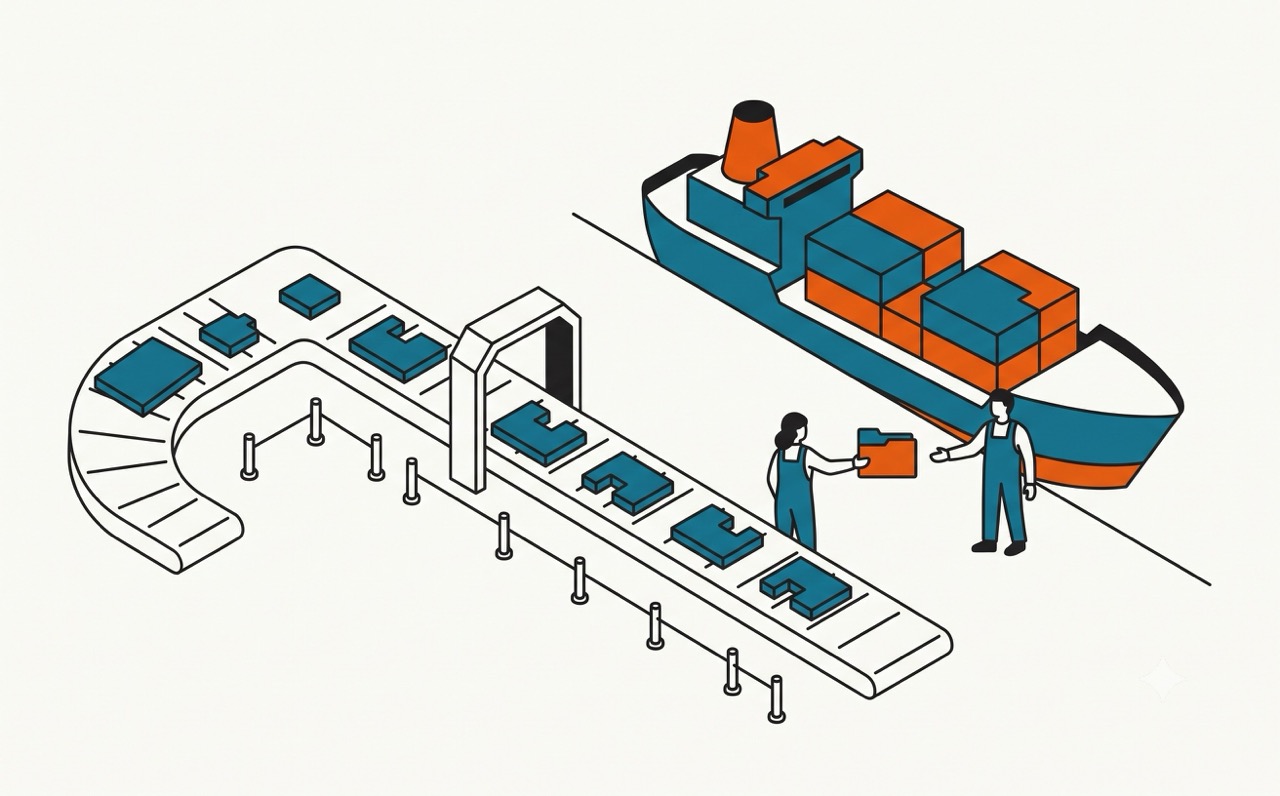
Build & StabiliseShip · 4–12 weeks
What you get
delivered or hardened production workstreamacceptance criteria, tests & runbooksADRs · handover & team enablement
From the portfolio
- Real-time Kafka/Scala platform, ESL — game-agnostic event platform under live-operations standby. sub-300ms · 100K+ events/min
- Zero-downtime strangler migration, SocGen CIB — PHP→Spring on the live trading floor. €10M+/day · −80% latency
- Termsheet generator, SocGen CIB — rules engine + AI solver, three years live. drafting halved
- PatternAlarm (side project) — one Flink topology, three industries, ML inline. 79× latency · ~$280/mo
Across the pipeline — data & AI
Kafka · Kafka StreamsFlinkCDC · DebeziumSparkScala · Java · PythonSpring Boot · FastAPIgRPC · Avro/ProtobufAWS EKS / MSK · KubernetesTerraform · ArgoCD · CI/CDPrometheus · Grafana · LokiCassandra · PostgreSQL · DynamoDBLangGraph · RAG in productionsemantic caching · eval harness
Fractional CTO & AdvisoryDirect · 1–4 days/month
What you get
architecture & design reviewswritten ADRs · monthly steeringbuild-vs-buy, roadmap & senior-hire input
From the portfolio
- Fractional technical direction, early-stage startup — stack framed, key choices secured, technical function made investor-credible. no full-time hire
- Tech Lead standards at ESL — DDD / workflow-design set as the service-wide standard across the data platform. 5 years live
- Build-vs-buy & migration arbitration — Oracle→Cassandra path scoped and priced before commitment. 18× result
Direction scope — data & AI
architecture directionstreaming & data platform choices (Kafka · Flink · lakehouse)reliability & observability standardsAI governance — evals · guardrails · token FinOpsbuild-vs-buy & vendor choices (Confluent · Databricks · AWS)cloud & LLM cost controlincident escalation patterns
What people say
From clients and peers
“His capacity to quickly understand complex systems and develop creative, unconventional solutions was remarkable.”
ESL FACEIT Group · Letter of Reference
“Solid technical mix, creative under pressure, clean code — architecture to production.”
CEO & founder, streaming/AI scale-up · LinkedIn
“Exceptional Java expertise — I'd recommend him to any organization, whatever its size.”
Senior engineer, ex-Gemalto/Thales · LinkedIn
Full reference letter and recommendations on request.
How I work
Remote-first, clean, accountable.
Engagement
Direct B2B via Singapore Pte Ltd · clean EUR/GBP/USD invoicing · no payment intermediary.
Overlap & trust
Guaranteed 9:00–13:00 CET overlap · written decisions by default · 2-week paid trial at −20% on request.
Data & GDPR
DPA ready · data residency clarified upfront · sprints run on sandbox, replay or synthetic data.
Proof
Official ESL reference · Credly-verifiable AWS SAA · public LinkedIn recommendations · inspectable live code.
Before you ask
Before you ask.
The concerns worth raising before a serious engagement.
“Remote, on a production-critical system?”
That concern is legitimate. Critical production work should not depend on vague availability or blind trust. What matters is how decisions, changes, and access are controlled. You get architecture decision records (ADRs), tests, runbooks, guaranteed 09:00–13:00 CET overlap, and read-only or sandbox entry before production access.
“Can we trust the code you leave?”
“The handoff was a mess” usually means nobody understood the why. Acceptance means your team can run, change, and debug it without me. You receive tests, runbooks, architecture decision records, and enablement sessions that transfer the reasoning, not just the repository.
“Won’t we depend on you afterwards?”
Support retainers often become lock-in by another name. Every deliverable runs in your repositories, on your infrastructure, with or without me. Ongoing advisory is optional. You can verify that by having your team deploy, operate, and modify the result themselves.
“A Singapore company, for our procurement?”
Reasonable question. Cross-border contracting is never zero effort. But it is usually simpler than an umbrella setup: fewer links in the contractual chain, direct B2B terms, EUR/GBP/USD invoicing, DPA-ready paperwork, and an MSA proven at a Tier-1 bank. You receive a contracting one-pager upfront.
“Why not cheaper offshore engineers?”
A senior offshore engineer can cost less. The difference is not nationality; it is who sets the technical bar, governs delivery, and owns the hard calls. I either deliver the critical system directly or govern the lower-cost squad. You get clear decision rights, quality gates, and accountable outcomes.
“We’re only at POC stage.”
That is often the best time to ask. A POC proves possibility; the day-two gate decides whether it deserves production budget. You keep the exploration while removing uncertainty around cost, reliability, security, ownership, and what production would actually require.
Let’s talk
A 20-minute call to find your entry point.
No prep, no slides. We locate where you are on the path — and if there’s no fit, you walk away with one concrete suggestion. That’s the offer.
github.com/acourreg · linkedin.com/in/acourreg · scalefine.ai